Nobody Knew Their Name — Until the Movie Made Sure You Never Forgot It
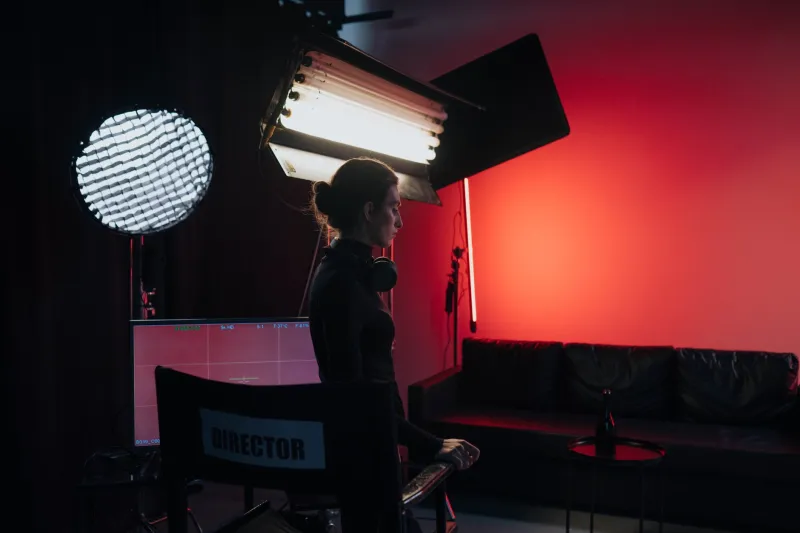
There's a meeting that happens at every major studio, in every development cycle, where someone slides a name across a table and says, "Trust me on this one." The room gets quiet. The financiers shift in their seats. Because that name — that unknown, unproven, zero-box-office-history name — is attached to the lead role of a production that cost tens of millions of dollars to greenlight.
Sometimes they trust the room. Sometimes they don't. And the gap between those two decisions has produced some of the most electric performances in cinema history — and a few legendary disasters nobody wants to talk about anymore.
The Math Nobody Wants to Do
Here's the dirty reality of casting in Hollywood: a recognizable face is essentially an insurance policy. Studios can pre-sell a film internationally based on star power alone. A known commodity in the lead role means easier financing conversations, cleaner marketing campaigns, and a built-in audience who'll show up opening weekend just to see their favorite actor do their thing.
Betting on an unknown strips all of that away. You're left with the actual movie. Which, terrifying as it sounds, is sometimes exactly the point.
When casting directors push for an unknown, they're usually seeing something the spreadsheets can't quantify — a quality of presence, a specific kind of rawness, an authenticity that a more polished performer might sand down in the process of being professional. The gamble isn't random. It's just unverifiable until the cameras roll.
When the Bet Pays Off
Think about Jennifer Lawrence before Winter's Bone. Not a household name, not a proven draw, just a twenty-year-old from Louisville with limited credits and an audition tape that apparently stopped the room cold. The film didn't have a massive budget. It didn't have a marketing blitz. What it had was a performance so lived-in and unselfconscious that it felt less like acting and more like surveillance footage.
Or consider how Rocky almost didn't happen the way it did. United Artists wanted a star in the lead. Sylvester Stallone — who wrote the script himself — insisted on playing Rocky Balboa. He was a nobody. The studio blinked first, and the result became one of the defining American films of its era.
More recently, Timothée Chalamet's emergence in Call Me by Your Name demonstrated what happens when a director trusts their eye over the marketing department's wishlist. Chalamet had credits, sure, but he was not a draw. He became one — almost overnight — because the performance demanded it.
The pattern in every successful unknown-actor gamble is the same: the role required something specific that a famous face would have disrupted. Familiarity is baggage. Sometimes you need someone who arrives clean.
When It Falls Apart
Not every bet lands, and the failures are instructive in ways the successes aren't.
The cautionary tales tend to share a common flaw: the studio confused "unknown" with "cheaper option" rather than "genuinely right for the part." When the decision to cast an unknown is primarily financial rather than creative, you can feel it on screen. The performance is fine. The movie is fine. But the electricity isn't there because the casting was never really about finding the right person — it was about finding an affordable placeholder.
There's also the question of support. An unknown actor in a demanding lead role needs infrastructure around them — a patient director, a strong ensemble, a production that isn't rushing through scenes to hit a schedule. When that support disappears, the cracks show. Stars have learned to perform under pressure. Unknowns are still figuring out where the camera is.
The Streaming Variable
Streaming has quietly shifted this conversation in interesting ways. Platforms like Netflix and HBO Max don't rely on opening-weekend box office to justify their productions, which means the financial pressure to cast a recognizable name is slightly reduced. They're optimizing for subscribers, not ticket sales.
This has created some genuinely adventurous casting in recent years. Shows and films on these platforms have introduced audiences to performers who would have struggled to get past the first round of studio notes a decade ago. The algorithm, weirdly, has made room for the unknown — at least in certain contexts.
But it's also created a new kind of pressure. Streaming originals need to cut through a tsunami of content. Sometimes that pressure pushes platforms right back toward recognizable faces, just for the thumbnail recognition alone.
What Separates the Winners
After looking at enough of these cases, a few things become clear about what separates the triumphant bets from the expensive mistakes.
First: the director has to be a true believer. Not cautiously optimistic — a genuine, unwavering advocate for that specific person in that specific role. When the director is hedging, the performance tends to hedge too.
Second: the script has to do its share of the work. An unknown actor can't coast on charisma and crowd goodwill the way an established star sometimes can. The writing has to give them somewhere real to go.
Third — and this is the one the industry consistently undervalues — the unknown has to be unknown for reasons that don't matter for this particular role. Not every great actor has been discovered yet. Some of the best performances you've ever seen came from people who just hadn't found the right part.
The studios that understand this produce genuinely surprising cinema. The ones that treat it as a cost-cutting measure produce something else entirely.
The gamble never fully goes away. But the smart version of it was never really a gamble at all.