The Show Everyone's Watching Alone: How Streaming Buried the Water Cooler
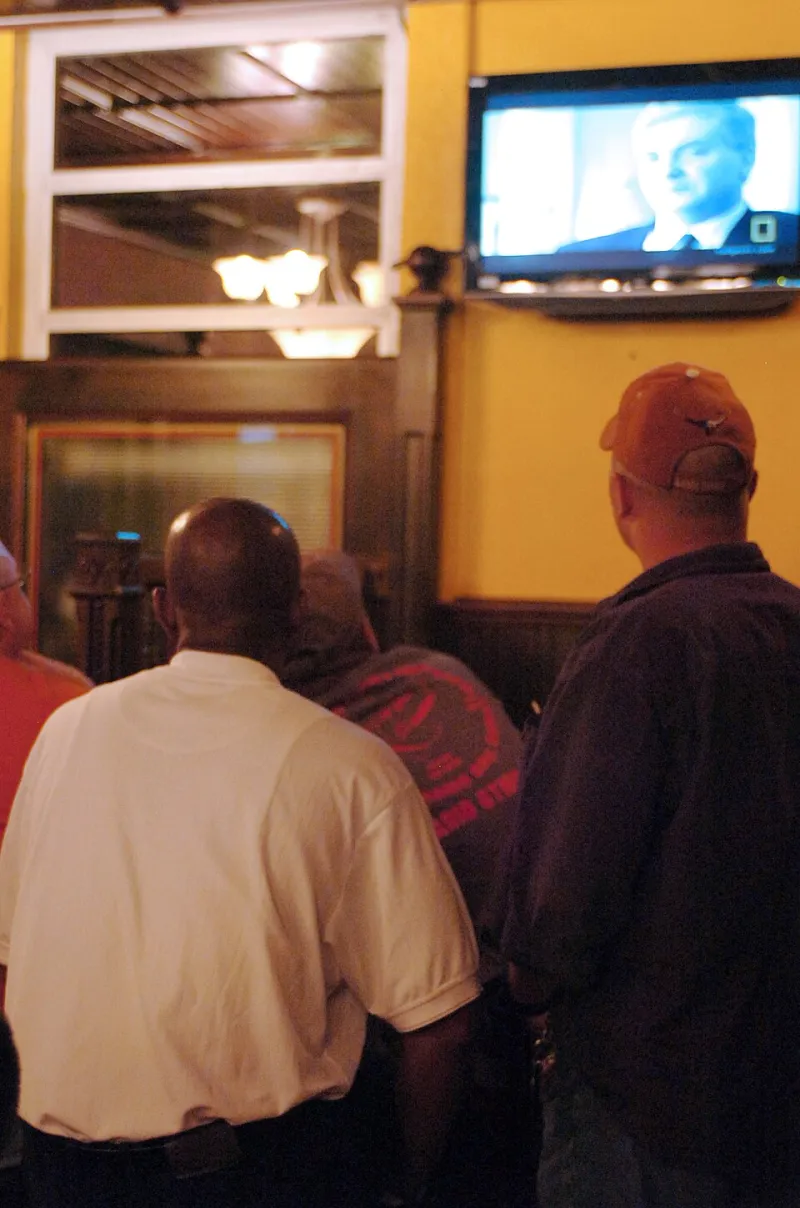
Photo: Unknown authorUnknown author, Public domain, via Wikimedia Commons
There was a specific kind of Monday morning that doesn't really exist anymore. You'd walk into the office, or a classroom, or a diner, and somebody would say: Did you watch it last night? And you'd either know exactly what they meant, or you'd feel the mild social pressure of being behind on something the whole world was apparently watching in real time. That shared urgency — the feeling that a television show was a communal event you either participated in or missed — was one of the defining textures of American pop culture for decades.
Streaming didn't just change how we watch television. It quietly dismantled the conditions that made certain shows feel genuinely important.
What the Algorithm Actually Does
Personalized recommendation systems are genuinely impressive pieces of engineering. They learn your preferences, surface content you're likely to enjoy, and reduce the friction between you and your next binge. From a pure user-experience standpoint, they deliver on their promise.
But they do something else at the same time, something that's easy to miss because it happens in the negative space — in what doesn't get recommended to you. The algorithm optimizes for individual engagement. It is not trying to create a shared cultural moment. It has no incentive to point you toward a show that the rest of the country is watching simultaneously, because that show might not be the best fit for your specific viewing profile.
The result is a media landscape where everyone is watching something, and nobody is watching the same thing at the same time. Your coworker is three seasons deep into a Danish thriller you've never heard of. Your neighbor just finished a limited series that came out eighteen months ago and is only now reaching them through the recommendation pipeline. You're halfway through something that was apparently huge last spring but somehow never crossed your radar.
This is the streaming paradox: more content than ever, less shared experience than ever.
The Death of Organic Momentum
Word-of-mouth used to be a television show's most powerful promotional tool, and it worked through a specific mechanism. A show would air. People would watch it on the same night, at roughly the same time, because there was no other option. The next day, the conversation would start. Someone would tell someone else. The audience would grow week over week, building momentum through genuine human enthusiasm.
That mechanism is essentially broken now. When a streaming platform drops an entire season at once, there's a brief window of concentrated conversation — the first week or two after release — and then the discourse dissipates. The people who binged it immediately have moved on. The people who are watching it slowly are avoiding spoilers. The people who haven't started yet are adding it to a queue that already has forty other things in it.
The show never gets to build. It either explodes immediately or it quietly disappears into the catalog, where the algorithm may or may not resurface it for the right person at the right time.
What Prestige Television Lost in the Trade
The shows that suffer most visibly from this dynamic are the ones that depend on cultural saturation to reach their full potential. Prestige dramas, ambitious limited series, challenging narratives that require a critical mass of engaged viewers to generate the kind of sustained conversation that elevates them from "good show" to "television event" — these are the casualties.
Think about the last time a streaming-native series generated the kind of sustained, months-long cultural conversation that something like The Sopranos or Breaking Bad produced during their original runs. It happens occasionally — Squid Game being the obvious recent example — but those moments feel like exceptions now, anomalies that briefly recreated the conditions of an older media environment before the algorithm absorbed them back into the personalized feed.
The shows that do break through tend to do so through social media virality rather than organic word-of-mouth, which is a different thing entirely. Virality is loud and fast and short. Word-of-mouth is slow and deep and durable. The first gets you a trending topic. The second gets you a show that people are still talking about five years later.
The Silence Nobody's Complaining About
What's strange about this shift is how little resistance it's generated. Audiences have largely accepted the trade — unlimited access to content, in exchange for the shared experience of consuming it together — without much protest. The convenience is real and the loss is abstract, which makes it easy to overlook.
But spend five minutes trying to have a conversation about a streaming show with a group of people and you'll feel the friction immediately. Half the room hasn't started it. One person finished it months ago. Someone else is halfway through and loudly doesn't want spoilers. The conversation fractures before it can begin. Nobody's on the same page because nobody was ever pointed to the same page at the same time.
The platforms have little incentive to fix this. Fragmented viewing habits mean longer subscriber retention — if everyone watches everything at different times, the catalog stays perpetually relevant. A shared cultural moment is great press, but it's not necessarily great for the quarterly numbers.
Can the Water Cooler Come Back?
There are signs that some corners of the industry are starting to recognize what's been lost. The weekly release model — dropping one episode at a time rather than the full season — has made a quiet comeback at several major platforms, driven partly by the observation that shows released this way generate longer, more sustained conversation. The Bear, Andor, The White Lotus all benefited from the rhythm of weekly viewing in ways that full-season drops rarely replicate.
But the weekly model is a partial solution at best. It restores the temporal dimension of shared viewing without addressing the discovery problem. If the algorithm never surfaces a show to you in the first place, it doesn't matter how many episodes are released per week.
The honest answer is that the water cooler moment — that specific feeling of a show being something everyone is inside together — probably can't be fully recovered under the current streaming architecture. The infrastructure that created it is gone. What we have instead is an enormous, beautifully curated library of content, optimized for individual satisfaction and quietly indifferent to the communal experience that once made television feel like it mattered beyond the screen.