Your Childhood Is Not a Business Plan: How Studios Turned Nostalgia Into a Hustle
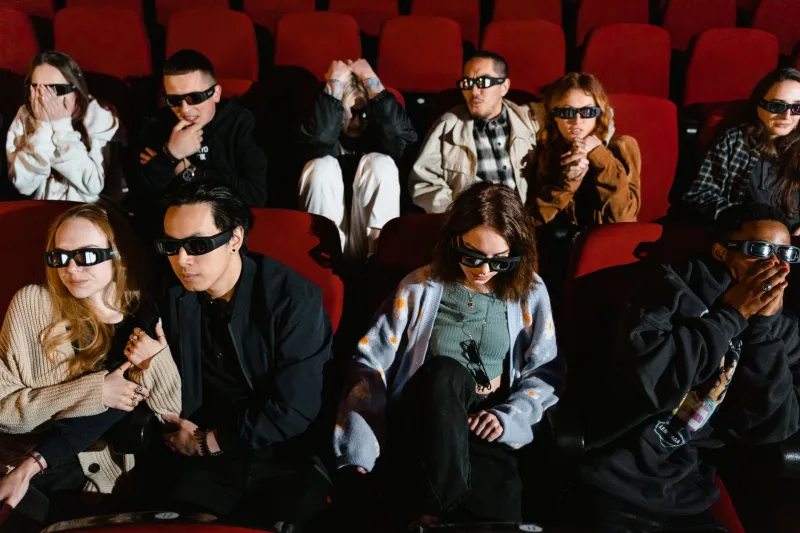
Let's be honest about something. When Disney announced another Star Wars project, or when Sony dusted off a franchise you hadn't thought about in fifteen years, your first reaction probably wasn't skepticism. It was something warmer. Something that lives in the same neighborhood as hope. That flicker — the one that says maybe this time they'll get it right — is not an accident. It's a product.
Hollywood has always recycled. Sequels, spin-offs, and adaptations are older than sound in film. But what's happening right now is something qualitatively different. The modern nostalgia machine isn't just borrowing from the past — it's strip-mining it, systematically, with actuarial precision. And American audiences, bless us, keep buying tickets to watch our own childhoods get fed through an industrial press.
The question worth sitting with is: when does fan service stop being service and start being exploitation?
The Math Behind the Memories
To understand why this is happening, you have to understand why original storytelling has become a harder sell in the current studio system. A genuinely new IP — a film with no built-in audience, no pre-existing emotional attachment, no merchandise pipeline — is a genuine financial gamble. It requires studios to build an audience from scratch, which costs money and carries real risk.
A sequel to a beloved franchise? That's a different calculation entirely. You're not selling a movie. You're selling a feeling. The marketing budget writes itself because the audience already has an emotional investment that predates the trailer. The opening weekend is practically pre-loaded.
This is why we've ended up in a landscape where the term "legacy sequel" — a film that essentially functions as a reunion special for an aging franchise — has become its own genre. Top Gun: Maverick, Scream (2022), Halloween Kills, Ghostbusters: Afterlife, Indiana Jones and the Dial of Destiny. Some of these are genuinely good movies. Some of them are not. But all of them exist, at least in part, because the studio math made them inevitable.
When It Actually Works
Let's be fair, because fairness matters here. Not every franchise revival is a cynical cash grab. Top Gun: Maverick is probably the most compelling argument for the defense. Tom Cruise and director Joseph Kosinski didn't just trade on nostalgia — they made a film that understood why the original worked and built something new on that foundation. It respected its audience enough to deliver genuine spectacle rather than just familiar faces. The nostalgia was a delivery mechanism for a legitimately great action film.
Mad Max: Fury Road is another example worth citing, even though it's technically a franchise continuation rather than a legacy sequel. George Miller didn't look backward. He took a dormant property and made something radical with it. The brand name opened the door; the filmmaking is what mattered.
The difference in these cases is intentionality. The creative team had something to say with the material, something beyond "remember when you loved this?"
When It's Just a Scam
And then there's the other category. The films — and increasingly, the TV series — that exist primarily as IP activation events. Where the goal isn't to tell a story but to occupy cultural real estate, generate streaming content, and keep a franchise's trademark from lapsing into irrelevance.
The Ghostbusters franchise post-2016 is a case study in this kind of confusion. Afterlife was a film that essentially replaced its own plot with a museum tour of the original movie's greatest hits, culminating in a third-act cameo parade that was more concerned with making audiences cry about their childhoods than with telling a coherent story. It worked at the box office. It was also, if you're being honest about it, an emotional con.
The recent wave of Disney+ legacy content — Obi-Wan Kenobi, The Book of Boba Fett, Indiana Jones prequels that nobody asked for — operates on a similar logic. These aren't stories that needed to be told. They're stories that needed to be produced to justify subscription costs and keep beloved characters in active circulation.
The MCU's phase problems have been extensively documented elsewhere, but the core issue is the same: when you're manufacturing content to serve a release calendar rather than developing stories that demand to exist, quality becomes a secondary concern.
The Audience's Role in All of This
Here's where it gets uncomfortable, because the studios aren't doing this in a vacuum. They're responding to data, and the data is us.
American audiences have demonstrated, repeatedly and with our wallets, that we will show up for familiar things. We will complain about Hollywood's lack of originality and then buy tickets to the fifth installment of a franchise we've been calling tired for a decade. We will post on social media about the death of the mid-budget adult drama and then stream the new Fast & Furious spin-off anyway.
The nostalgia industrial complex runs on a specific vulnerability: the desire to feel what we felt the first time. That first Star Wars screening. That Saturday afternoon with Ghostbusters. That summer with Top Gun. Those are real emotional memories, and there's nothing shameful about wanting to reconnect with them. But studios have learned to manufacture a simulation of that feeling — close enough to trigger the response, engineered well enough to pass on first contact — and charge full price for the counterfeit.
The question isn't whether nostalgia is a legitimate emotional experience. It obviously is. The question is whether we're being sold genuine creative engagement with the things we love, or whether we're being sold a mirror pointed at our own memories.
What a Better Version of This Looks Like
The good news is that there's a version of franchise revival that isn't extractive. It looks like Maverick. It looks like what Denis Villeneuve did with Dune — technically an adaptation rather than a revival, but a case study in how to approach beloved material with genuine creative ambition rather than protective timidity.
It looks like filmmakers who have something to add to a story, not just something to take from its goodwill. It looks like studios willing to let a property fail gracefully rather than zombifying it through endless spin-offs.
Most importantly, it looks like audiences who are willing to ask — before the trailer's nostalgia hit has fully metabolized — whether this movie actually needs to exist, or whether they're just being sold a feeling they already had for free.
Your childhood was real. It doesn't need a theatrical release. And it's worth protecting from people who've figured out how to monetize it.